
History of Lowndes Park
Lowndes Park, in the centre of Chesham, is recorded as far back as the 12th century. At that time, the land was part of the Bury manor, which was owned by a succession of families.
In 1802, the estate was bought by William Lowndes, who promptly demolished the manor house, Bury Hill House (where the Guide Hut now stands). He added the grounds to those of his house, The Bury, which still stands today, in Church Street.
The Lowndes family let the park for agricultural use in the 19th century, whilst making a number of alterations to the site. These included gravelling the avenue and replanting the rows of elms that flanked it.
In 1920, William Frith-Lowndes let the Lower Park to Chesham Urban District Council for use as a public recreation ground.
By 1970 the whole park was owned by the council. In 1972 the park was dedicated a Public Open Space and named Lowndes Park. Then in 1974, the newly formed Chesham Town Council took over care of the park.
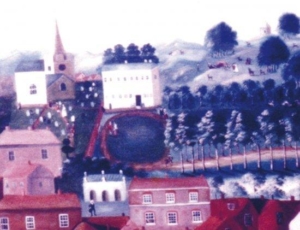
Painting of Chesham including Lowndes Park, which is in Chesham’s Town Hall. Image courtesy of Peter Hawkes.
Early 12th century The Sifrewast family held the Bury manor land, which encompassed the site of the current park.
1490 The Earl of Oxford acquired the Bury manor.
1579 Thomas Ashfield, a bailiff of the Earl of Oxford, acquired the manor.
1656 The Whichcotes held what had been the Ashfield’s Chesham land.
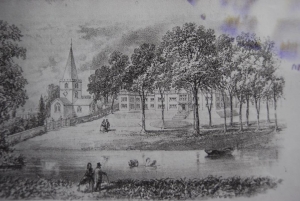 Illustration from 1770 of Bury Hill House.